
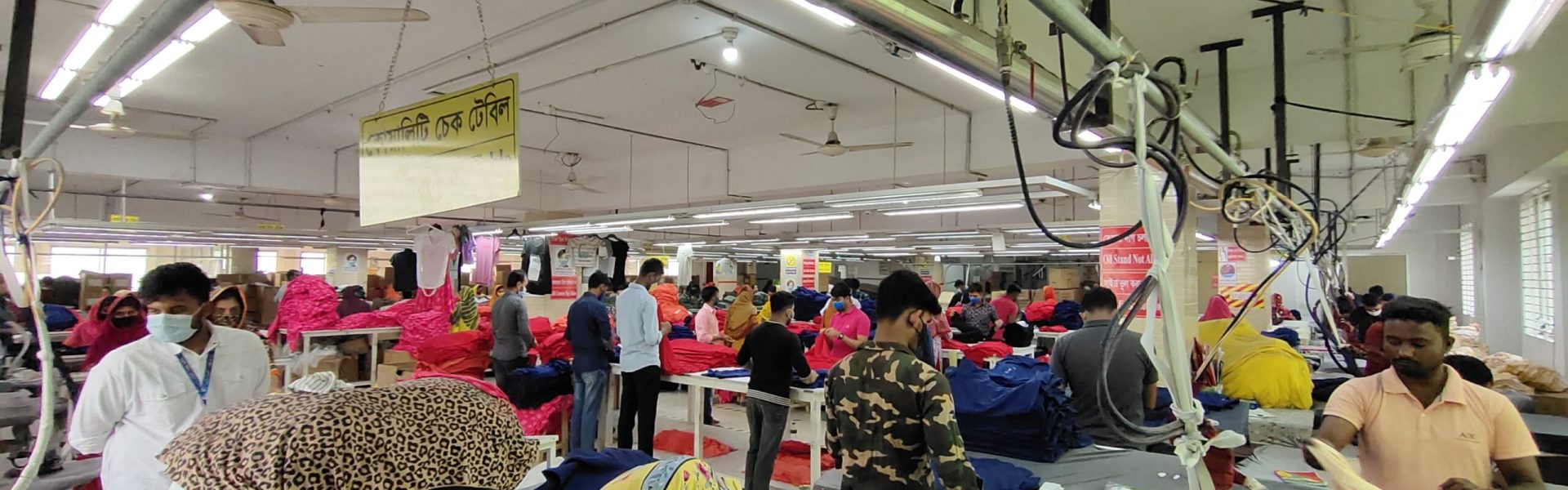

According to our country’s policy, employees under the age of fourteen are not permitted to work for United Costume Limited. According the law- child work is prohibited under the International Labor Organization’s and Social Audit Standard, as well as the International Labor Organization’s and Local Labor Law Standard. Persons under the age of 14 are not permitted to recruit or employ for any type of job, regardless of whether they are of the male or female gender. The rights of young workers must be respected or else the corporation should refrain from hiring young workers in the first place. However, Employees under the age of eighteen are not allowed to work for United Costume Limited, according to company policy. We fight for and respect international human rights safeguards within our sphere of influence, and we take efforts to ensure that we do not participate in human rights violations ourselves or in the company of our customers or clients. Indentured labor, jail labor, and any other type of exploitation are not tolerated at United Costume Limited.
Fashion is a particularly problematic industry for child labor since much of the supply chain relies on low-level labor, and some activities are even better suited to children than to adults in some cases. Global supply networks are frequently opaque, which can aid in the concealment of child labor. Children who labor are deprived of a childhood and the opportunity to receive an education, and they are more than likely doomed to a life of squalor and deprivation. To provide complete and total openness, we conduct external audits every year to inform our consumers that our factories are absolutely free of child labor and that our corporate strategy does not allow for such infractions to occur in the first place.
Child labor is mostly influenced by poverty, which is the most significant factor. Adult employees frequently earn so little that they are unable to provide for their family’s basic necessities with the money they earn. There is a definite correlation between child labor and low salaries for adult employees in the knitwear and garment industries, and this link has been established. Children are forced to labor in order to supplement their family’s income. Children are simple to abuse since they are inexpensive laborers, and because of their tiny height and agility, they are frequently preferred over adults in employment. This is why we have made certain that all of our employees receive enough and equitable remuneration in order for them to be able to properly meet the fundamental demands of their families. In addition, we have developed a day care facility for the children of these employees so that they may have an education, nutritious meals, and other basic requirements met while they are in school. Our goal is to construct an industry in which child labor is completely forbidden and in which the children are taught in order for them to be able to establish themselves and be successful in their future endeavors.
When it comes to the clothing industry, supply chains may be very fragmented, with several actors providing value at different levels. Due to the sometimes convoluted value chain and opaque subcontracting techniques, which are most prevalent in informal settings, it is difficult to trace the origin of a garment all the way back to textile manufacturing and, ultimately, to the manufacture of cotton. As a consequence, we are very upfront about our supply chain and sourcing methods, and we thoroughly vet our sourcing partners to ensure that they do not engage in child labor practices. As a firm, we do not affiliate ourselves with any organization that advocates or practices child labor, and we do not encourage or practice child labor ourselves either.
Lack of employment protection and discrimination against pregnant women are pervasive across the industry, with consequences for child health, particularly for women who work in insecure jobs and are at risk of being fired. This, in turn, feeds into the vicious circle that is child labor. Typically, the children are compelled to engage in child labor in order to provide for their family, as their mother is unable to work while pregnant. The cycle continues to replicate itself, resulting in the continued use of child labor and the exploitation of children. As part of our maternity leave policy, United Costume Limited ensures that pregnant women receive an acceptable length of time off work, as well as sufficient remuneration for their families so that they are not forced to force their children to work. In accordance with local and international laws, United Costume Limited does not engage in any form of forced labor, including prison labor, indentured labor, bonded labor, or any other form of forced labor that is forbidden by law and/or international treaties.
The abolition of child labor in our factories has had a wide range of consequences for the entire organization. Because they no longer have to worry about their children’s education, the employees are now more motivated, and the children themselves are more attentive to their studies and have higher aspirations in their life. We think that every one of these children should get a high-quality education and be given a reasonable chance of reaching their life goals. We are always striving to make our society more inclusive and educated for all members of it.
We advocate for and uphold international human rights protections within our zone of influence, and we take steps to ensure that we do not take part in human rights violations ourselves or with our clients. Our policies prohibit child labour, establish minimum wages, establish work hours, prohibit discrimination, prohibit harsh or inhumane treatment, and encourage employee association to provide protection to all of our employees.